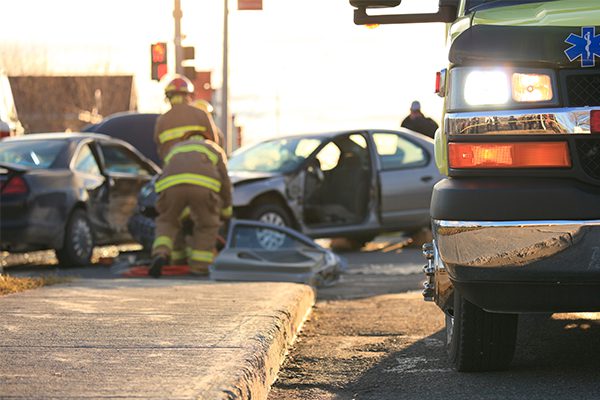


Drivers Show Disconnect in Attitudes about Distracted Driving

18
May
By: admin

How many times have you been cut off in traffic, or watched another driver run a stop sign, only to notice that the driver was talking on a cell phone?

How many times have you yourself started to veer toward other cars when you stumbled to reach your cell phone or tried to respond to a friend’s text?

Most drivers recognize that cell phones are a distraction that can be dangerous on the road. Yet few drivers want to give up the convenience of talking or texting while they’re driving.

An article in USA Today reports that the AAA Foundation for Traffic Safety found that 94 percent of drivers think that texting while driving is a “serious threat” to safety and that 87 percent of drivers are in favor of texting bans. However, more than a third of drivers also admitted to reading texts or e-mail while driving, and nearly 70 percent said that they talk on their cell phones while driving.

Cell Phones and Safe Driving

Data about the dangers of texting or talking on a cell phone while driving is unclear. While the National Highway Traffic Safety Administration says that cell phones were a factor in about 13 percent of fatal crashes last year, officials note that reporting is unreliable. Drivers are not likely to report that they were engaging in risky behavior while driving, such as talking on a cell phone or texting, especially if those behaviors have been banned in that region.

USA Today reports that the National Transportation Safety Board called on states in December to ban handheld and hands-free cell phone use while driving.

Meanwhile, cell phone providers and automobile manufacturers are working to provide some solutions. For example, apps are being introduced to allow drivers to turn off their phones while driving. The majority of cars now also have Bluetooth capability and the ability to link phones with the vehicles.

North Carolina Personal Injury Lawyers

One thing that safety experts can agree on: Talking or texting on a cell phone is distracting, and driving while distracted increases dangers on the road. Take proactive measures to reduce your use of cell phones while you’re driving to ensure your family’s safety.

If you are involved in an accident with someone who was using a cell phone while driving, you may be entitled to compensation. Find out if one of the North Carolina personal injury lawyers at the Law Offices of James Scott Farrin can help you. Call 1-866-900-7078 for a free evaluation of your case!

Groups Support Proposed Legislation to Overhaul System Used to Review Workers’ Compensation Settlements for Medicare

The American Insurance Association and the Coalition for Medicare Secondary Payer reform both announced their support for the Medicare Secondary Payer and Workers’ Compensation Settlement Agreements Act of 2012, introduced last week by Representatives Dave Reichart (R-Wa.) and Mike Thompson (D-Ca.).

The legislation is aimed at resolving the delays in the review of workers’ compensation set-asides for Medicare.

A Medicare Set-Aside Arrangement (MSA) is an account that is created when a workers’ compensation case is settled to protect Medicare from paying for expenses that are related to the worker’s injuries. Therefore, if a worker has to receive surgery, the MSA would be used to pay for it, rather than Medicare benefits.

“(The Centers for Medicare and Medicaid Services) takes too long to review proposed set-asides, fails to provide appropriate and consistent standards for determining amounts to be set aside, and provides no avenue to appeal CMS determinations,” Douglas Holmes, the coordinator of the Coalition for Medicare Secondary Payer Reform, said in a press release. “The process results in injured workers not receiving funds, additional costs for states and workers’ compensation payers, and additional liability for employers, insurance carriers, and attorneys. A legislative solution to this problem is needed.”

The coalition, which includes representatives for injured workers and insurance carriers, has been pushing for reform of this system for some time, and the Government Accountability Office released a report in March that included recommendations for improving these processes.

“In case after case, we hear of delays in approval, uncertainty of the amount to be reimbursed by injured workers, and changes in amounts to be set-aside after settlements have already been approved,” J.R. Boyd, the president of the Workers Injury Law and Advocacy Group, said in a press release.

Holmes said that the proposed legislation will provide “clear and consistent standards” for the administration of set-asides and to improve processing times.

Other organizations supporting this legislation include:

  • National Council of Self-Insurers
  • Property Casualty Insurers Association of America
  • UWC – Strategic Services on Unemployment & Workers’ Compensation
  • Washington Self-Insurers Association
  • American Association for Justice
  • American Bar Association
  • Workers Injury Law and Advocacy Group

The Medicare Secondary Payer and Workers’ Compensation Settlement Agreement Act of 2012 has been referred to the Ways and Means Committee for consideration.

If you or a loved one has been injured on the job, you may be able to receive compensation for your injuries. Contact the Law Offices of James Scott Farrin for a free and confidential evaluation of your case.

Operation Drive to Live Pushes Parents to Talk with Teenage Drivers about Safety

Car crashes are the leading cause of death among teen drivers in North Carolina, and teenagers are involved in three times as many fatal crashes as other drivers, according to the N.C. Highway Patrol.

The National Highway Traffic Safety Administration reports that every year, the number of fatal crashes involving teenagers rises in April, May, and June, corresponding with prom and graduation season.

In an effort to combat that trend and to promote safe driving education, the N.C. Highway Patrol recently conducted its annual “Operation Drive to Live” campaign, which combined an increased presence and enforcement of traffic laws around school zones, as well as traffic-safety education programs in high schools.

As part of the program, which ran from April 9-13, troopers looked to step up enforcement of violations such as speeding, following too closely, reckless driving, and distracted driving.

Safe Driving Agreements

Operation Drive to Live strives to highlight the dangers that teen drivers face on the road to encourage parents to take steps to teach safe driving practices and to encourage responsibility behind the wheel.

The N.C. Highway Patrol estimates that a teenager is involved in a crash every 23.6 minutes and says that their crash rates increase dramatically when they are no longer driving while supervised.

The N.C. Highway Patrol encourages parents to adopt a driving agreement with their teens. A driving agreement is a formal agreement that outlines specific actions and behaviors that are expected of both teens and parents.

A driving agreement could include agreements by the teen driver to never drive a vehicle after drinking or taking drugs and never to be a passenger in a vehicle with a driver who is intoxicated. The agreement could also include promises to always wear a seat belt, to obey the speed limit, to avoid distractions such as texting or playing with the radio while driving, and to avoid aggressive or reckless driving.

Parents are advised to review the agreement every 60 days and revise it as necessary.

North Carolina Personal Injury Lawyers

If you or a loved one were injured in an automobile accident, the Law Offices of James Scott Farrin may be able to help you. Call 1-866-900-7078 right now to get a free evaluation of your case!

Congress Debates Whether to Allow Student Loan Debts in Bankruptcy

Few students can afford to pay for college completely on their own. The majority of students take out at least some form of financial aid to pay for their college education.

According to the 2007-08 National Post-Secondary Student Aid Study (the last year for which data is available), 66 percent of undergraduate students finished their degree with some debt, and the average debt was $27,803.

Student loan debt for graduate and professional students such as those attending law school or medical school can exceed $100,000.

Students graduating with poor job prospects in a still floundering economy may find themselves unable to pay back these debts. While many government loans offer income-based repayment plans and other options for those experiencing financial hardship, many private loans do not.

The high cost of student debt and the limited options for those with private loans has spurred some legislators to advocate for allowing private student loan debt to be included in a bankruptcy filing.

Proposed Changes

Changes to the bankruptcy laws in 2005 broadened the definition of the type of student loans that were excepted from a discharge in bankruptcy.  In essence, the changes made private student loans ineligible for discharge in a bankruptcy – except in extreme cases of hardship, for which a petition to the Bankruptcy Court could be made. Federal student loans have been ineligible for discharge unless a showing of “undue hardship” could be made by the bankruptcy debtor for two decades.

Sen. Rick Durbin (D-IL) has proposed allowing private loans to be included in a bankruptcy. A bill was proposed in 2011 to make these changes, and legislators are currently debating it.

Some feel that allowing the change would prompt abuse from student borrowers, but others note that rising tuition costs, high interest rates, and fewer economic opportunities have led to a crisis in student-loan lending and that students need relief where appropriate.

In the fourth quarter of 2011, outstanding student loan debt reached $867 billion, according to the Federal Reserve Bank. Student loans exceed what Americans owe on credit cards and auto loans combined. The Consumer Financial Protection Bureau estimated that total federal and private student loan debt is more than a trillion dollars.

BANKRUPTCY FOR DEBT RELIEF

If you are struggling with student-loan debts, you don’t have to wait until Congress makes a decision to act. Bankruptcy may be able to provide you some debt relief by eliminating other unsecured debts or providing a debt-repayment plan for your other debts, allowing you to free up the income needed to pay back your student loans. A North Carolina bankruptcy lawyer at the Law Offices of James Scott Farrin may be able to help! Call 1-866-900-7078 to get a free evaluation of your case to find out what type of bankruptcy may be appropriate for you.

New Safety Testing Reveals Women and Children May Be at Greater Risk of Injury or Death in a Car Accident

Women often spend a lot of time driving their children to and from school, extracurricular activities like sports, and family activities.

Because they spend so much time on the road with such precious cargo, women often choose vehicles based on their safety rating and other perceived safety features. Yet new vehicle ratings reveal that safety information had been skewed for men, and that women and children may actually be at greater risk of serious injury from car accidents than previously thought.

Starting with 2011 models, the federal government began using a smaller “female” crash-test dummy for some safety tests, instead of the standard, average-sized “male” dummy. The result has been a lower safety rating for many vehicles – as much as two stars – to reflect the increased risk of serious injury for smaller passengers, such as women and children.

Different Safety Standards

Male dummies have been used exclusively in frontal-crash testing for safety ratings for more than 30 years. Experts say that, in general, the larger the person, the greater the impact that person can withstand in a crash.

The National Highway Traffic Safety Administration (NHTSA) reports that smaller drivers and passengers suffer more head, abdominal and pelvic injuries when cars wrap around trees or utility poles. A 2011 study by the Center for Applied Biomechanics at the University of Virginia found that, even when wearing seat belts, female drivers were 47 percent more likely to suffer serious injury than male drivers in similar crashes.

Men are more likely to die behind the wheel because they spend more time on the road. However, according to the NHTSA, women are killed and injured at disproportionately higher rates than men when their driving time is factored in.

Greater Risk

Traditionally, crash-test dummies have been modeled after an average-sized man, who can withstand greater forces in a crash. However, experts note that little testing has been done on behalf of the elderly, larger children, the obese, or others who fall outside average weight categories.

New safety testing has revealed that women and children may have been at far greater risk of injury on the road than they had thought. This information may have been misleading to some, who did not fully understand how the safety rating was measured.

Don’t risk your family’s safety. Check http://www.safercar.gov/ for your vehicle’s rating, and how it compared with the previous year when only male dummies were used.

If you or your loved ones were injured in a serious accident, call the Law Offices of James Scott Farrin, with offices throughout North Carolina, at 1-866-900-7078 to find out if we may be able to help you. You may be entitled to compensation under the law!

Distracted Driving May Lead to Accidents and Serious Injury

If you’re driving and you get a text from a friend, you may want to ROFL, but you’ll have to say “TTYL” instead to ensure that you aren’t saying “SMH” because you’ve been in an accident.

Distracted driving – including talking on a cell phone or texting – can lead to accidents that cause serious injury or even death.

According to research from Monash University, drivers who use hand-held devices are four times more likely to get into serious car accidents.

The National Highways Traffic Safety Administration estimates that 16 percent of fatal crashes in 2009 involved reports of distracted driving, and 20 percent of crashes with injuries involved distracted driving.

April is National Distracted Driving Awareness Month, and officials are trying to get the word out that talking on the cell phone or trying to text while driving poses a significant risk to safety, both to yourself and to other drivers.

Many companies and local governments have already taken steps to regulate distracted driving.

State Cell Phone Laws

Nine states prohibit all drivers from using hand-held cell phones while driving. No state bans all cell phone use (hand-held and hands-free) by all drivers. However, 36 states ban text messaging for all drivers.

In North Carolina, there is a ban on text messaging for all drivers, and school bus drivers and drivers under 18 are banned from using cell phones while driving. Using a phone to check e-mail or the Internet while driving is also prohibited for all drivers.

The local Chapel Hill government recently passed a ban on the use of all cell phones while driving, including hands-free devices. The ban will go into effect on June 1.

Federal Laws for Businesses

A new federal law has also been passed that bans commercial drivers from using hand-held cell phones. The Federal Motor Carrier Safety Administration law took effect on January 3.

Under the new law, not only can commercial drivers be fined for using a cell phone, but companies can also be fined for requiring or allowing drivers to use cell phones.

Many companies are following suit by passing their own distracted-driving policies. Reliance Steel & Aluminum told USA Today that it has banned the use of any kind of electronic communication device while driving, including CB or cell phone for calling or texting. Enbridge Energy Partners told the paper that it has banned the use of cell phones for company business while driving, even in personal vehicles.

NORTH CAROLINA ACCIDENT LAWYERS

If you or a loved one was injured in an accident that involved a distracted driver who was talking on a cell phone or texting, you may be entitled to compensation. One of the North Carolina personal injury lawyers at the Law Offices of James Scott Farrin may be able to help you. Call 1-866-900-7078 right now for a free evaluation of your case!

Study examines gas pedal accidents in North Carolina

Older women cause about two-thirds of all gas pedal accidents in which the driver accidentally steps on the accelerator instead of the brake, according to a new study by the National Highway Traffic Safety Administration.

The study, reported by the Associated Press, also finds that when looking at all types of car accidents, about 60 percent of drivers involved in motor vehicle crashes are men.

And in another finding, the gas pedal accidents tend to involve drivers who were over age 76 or under age 20. Researchers analyzed more than 2,400 gas pedal accidents in a North Carolina state crash database and also looked at nearly 900 media reports of such crashes.

If you or a loved one is injured in an accident due to negligence, such as a gas pedal accident, don’t hesitate to contact a North Carolina personal injury lawyer. An experienced car accident attorney in North Carolina who is well versed in state law may be able to help you get compensation for your losses.

At the Law Offices of James Scott Farrin, our legal professionals have experience representing people injured through no fault of their own. The staff and attorneys have seen first-hand the devastating impact of serious injuries that may occur as a result of some other person’s negligent behavior.

Gas pedal accidents in the United States have had tragic consequences. In 2003, an 86-year-old man drove his car into a busy open-air market in Santa Monica, Calif., which resulted in 10 deaths and 63 injuries.

Most of these types of accidents occurred in parking lots, parking garages and driveways, according to the federal study.

While there may be several reasons for the frequency of gas pedal accidents among elderly drivers and teenage drivers, researchers say it’s possible that areas of the brain that deal with driving aren’t as robust in those age groups, according to the Associated Press report.

The Highway Safety Research Center at the University of North Carolina, under contract for NHTSA, and TransAnalytics LLC of Quakertown, Pa., conducted the study, according to the Associated Press.

Auto accidents can be overwhelming, whether you were injured in a car or injured as a pedestrian. A personal injury lawyer who knows how to deal with the insurance companies may be able to help you get justice. Talk to a law firm in North Carolina who understands what victims are coping with. Contact the Law Offices of James Scott Farrin. Call 1-866-900-7078 or visit www.farrin.com. The firm has 13 offices located throughout North Carolina.

Home Foreclosures Surge in January

Foreclosure sales spiked in January, indicating that many across the country are still struggling in the slow economy and may benefit from debt relief.

The LPS Mortgage Monitor reported that foreclosure sales rose to 91,000 in January, up 29 percent from the previous month. The number of foreclosure starts also increased by 28 percent, and starts for repeat foreclosures hit an all-time high of 47 percent.

The agency suggested that the increase could suggest that a backlog of proceedings have finally started to move forward.

Foreclosure sales had dropped off in the fall 2010 after problems with banks’ documentation practices surfaced. Sales had remained flat through 2011.

The biggest increase in foreclosure sales occurred in the 24 “judicial states” – states where banks must get a judge’s permission before foreclosing on a home. Foreclosure sales in these states were up 51 percent over the previous month.

North Carolina is a non-judicial state.

Bankruptcy for Debt Relief

Now that banks are initiating foreclosure proceedings more quickly, many families may be forced to make some hard decisions. Perhaps you have been struggling with your mortgage for months and have fallen behind significantly.

If you are facing the threat of foreclosure – or if the bank has already initiated foreclosure proceedings against you – bankruptcy may be able to offer you the debt relief you need. Depending on how far behind you are on your mortgage, and how much other debt you have accumulated, bankruptcy may allow you to catch up on your payments through a structured debt-repayment plan, or it may allow you to eliminate unsecured debts, freeing up the income to pay back your mortgage.

Now is the time to act. Call the Law Offices of James Scott Farrin at 1-866-900-7078 for a free case evaluation to find out how bankruptcy may be able to help you. Don’t wait until it’s too late!

N.C. Officials to Review Regulations after a Report that Thousands of N.C. Employers Don’t Buy Workers’ Compensation Insurance

The North Carolina Industrial Commission announced this month that it will begin a review of its own policies and procedures after the Raleigh News & Observer reported that tens of thousands of North Carolina business owners do not buy workers’ compensation insurance, leaving their employees unprotected if they are hurt on the job.

The newspaper reported this month (http://www.newsobserver.com/2012/04/01/1972200/when-nc-employers-dodge-workers.html#storylink=cpy ) that the state does not track lapses in coverage, even though the Industrial Commission is notified of such instances. The commission also does not usually enforce fines for these violations of the law (up to $100 per day), and cases that are brought before it rarely lead to prosecution or sentencing.

Lack of Protection

Workers’ compensation was introduced in the 1930s to protect workers who were injured on the job. In North Carolina, businesses with three or more employees are required to carry the insurance, or they must certify that they have the assets to pay for their liabilities for worker injuries.

However, the report by the Raleigh News & Observer indicated that about 170,000 companies in the state meet this criteria, yet databases show that insurance carriers only covered about 140,000 businesses for workers’ compensation insurance.

When workers are hurt on the job and their employers do not carry workers’ compensation insurance, they can sue their employer or appeal to the N.C. Industrial Commission to get compensation.

In the fiscal year 2011, the commission received 62,409 such claims, and about 75 percent of them were settled through mediation.

Need for Reform

The report by the Raleigh News & Observer noted that the N.C. Industrial Commission has the power to enforce the requirement that businesses carry workers’ compensation insurance, but that it rarely checks for lapses in coverage – which can be monitored through a state-mandated reporting system.

The commission is usually not aware that a business is in breach of the law until an injured worker files a complaint.

This lack of oversight often leaves injured workers struggling to pay mounting medical bills while also being unable to work, and proceedings can go on for years before a resolution is reached. Moreover, according to the article, those businesses who choose not to purchase workers’ compensation insurance often do so in an effort to cut costs and stay afloat, so most would not have enough assets to pay for any injuries should a case be decided in a worker’s favor.

The legislature approved changes to the workers’ compensation system last year but did not address the problem with the lack of coverage. Instead, the new law focused on cutting the amount and length of payment due to injured workers so that the cost of the insurance would go down.

Sen. Doug Berg, D-Franklin, a former deputy commissioner at the Industrial Commission, and a lawyer with the Law Offices of James Scott Farrin, called on Gov. Bev Perdue to make prompt reforms. He told The Charlotte Observer that he will ask Perdue to put reforms in the budget bill for this session.

Berger also said the commission should be required to perform spot checks on workers’ compensation insurance to ensure compliance. He also suggested giving more authority to the Department of Insurance to investigate fraud.

Gov. Bev Perdue called on the commission to make immediate changes to correct the problem.

NORTH CAROLINA WORKERS’ COMPENSATION LAYWERS

If you were injured on the job, don’t wait to find out if your employer is in compliance of the laws and will be able to provide compensation for your injuries. Call the Law Offices of James Scott Farrin at 1-866-900-7078 to find out how we may be able to help you. We have experienced North Carolina workers’ compensation lawyers who may be able to fight to get you the compensation you may deserve.

Research Suggests that Changes in Bankruptcy Laws May be Limiting Some People Who Want to File for Bankruptcy from Doing So

Tax time may give some the chance they need to finally to take a little trip. Others may use that extra cash to pad their savings for a rainy day.

For many who are struggling financially, tax time gives them the opportunity to finally declare bankruptcy, new research shows.

Economists at Columbia University, the University of Chicago, and Washington University in St. Louis found that the number of bankruptcy filings increases after people receive their tax refunds – when they finally have the money to pay the increased filing costs brought about by changes to the bankruptcy laws in 2005.

The researchers argue that many who want to file for bankruptcy cannot afford the average of $1,477 in fees that it now costs to file – an increase of approximately 60 percent since the 2005 Bankruptcy Abuse Prevention and Consumer Protection Act was passed. The law also requires people to pay for their own mandatory credit counseling before they can file.

Limited Access

According to the American Bankruptcy Institute, more than 2 million people filed for bankruptcy in 2005. After the new law was passed, that number dropped 71 percent to 598,000.

Researchers for this new study said that bankruptcy filings rose 2 percent after tax rebates were received in 2001, but they increased 7 percent after tax rebates in 2008 – an increase of more than 300 percent.

The evidence suggests that the changes in the law have prevented many with lower incomes from filing for bankruptcy, rather than screening out abuse as intended, the researchers said.

“According to our research, bankruptcy fees prevent the most financially distressed households from being able to file, and tens of thousands of households will have trouble saving up for bankruptcy in 2012,” said Jialan Wang, a finance professor at Washington University in St. Louis and one of the study’s authors.

Bankruptcy provides a valuable form of debt relief for many families, and an experienced bankruptcy lawyer can help you determine how best to file bankruptcy if it is the right solution for you. Call the Law Offices of James Scott Farrin at 1-866-900-7078 to find out how we may be able to help you!